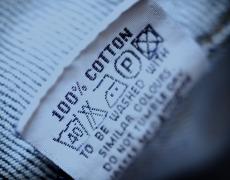
These types of labels usually come in the form of a small piece of fabric bearing the brand name, company details and some product information – origin, size, content, washing instructions, etc. They are an effective way to identify products, especially when combined with other security features, such as a barcode or a hologram. For enhanced anti-counterfeiting capabilities, they can even be combined with an RFID tag to become ‘smart labels’. Fabric labels can be woven or printed, with the logo or wording being woven into the piece of fabric or printed on top of it, respectively.
Used for
Authentication
Tracking/Tracing
Anti-tampering / Anti-alteration
Suitable for
Very small products
Small products
Medium-sized products
Large products
Goes on
Product
Packaging
Can be used for
Physical products
Visibility
Visible
Reading device needed
Yes
No
Connection to server
Yes
No
Description
Fabric labels are highly versatile in that they can be combined with several other security features to produce labels of varying degrees of sophistication. The simplest labels merely display product information and identification codes (usually barcodes). The more complex labels incorporate more advanced security features, such as holograms, security threads and tracer fibres. The most complex – ‘smart labels’ – incorporate RFID tags or even NFC devices for when the goods are particularly valuable.
Standard label sizes usually vary between 20 mm and 70 mm, depending on the type of product and the marketing needs. Woven labels are the most common type used for clothing and accessories, as their fine thread allows for more details to be included in words and patterns. Printed labels are also used for clothing, and are most commonly attached to or directly printed on the inside of the product.
Uses
Fabric labels are mainly used for textile and leather products in general, and for apparel and footwear in particular.
Implementation
If you want to implement this technology, you will need to revise the way in which labels are attached to your products, in order to ensure robust stitching is used. It is recommended that stitching is done in such a way that removal will result in visible damage to the product. As with other types of labels, partly or fully automated solutions are available for those fabric labels that do not need to be applied manually, depending on the quantity to be applied.
Cost
The costs associated with simple fabric labels are quite low; costs associated with ‘smart labels’ largely depend on the characteristics of the additional technologies involved.